
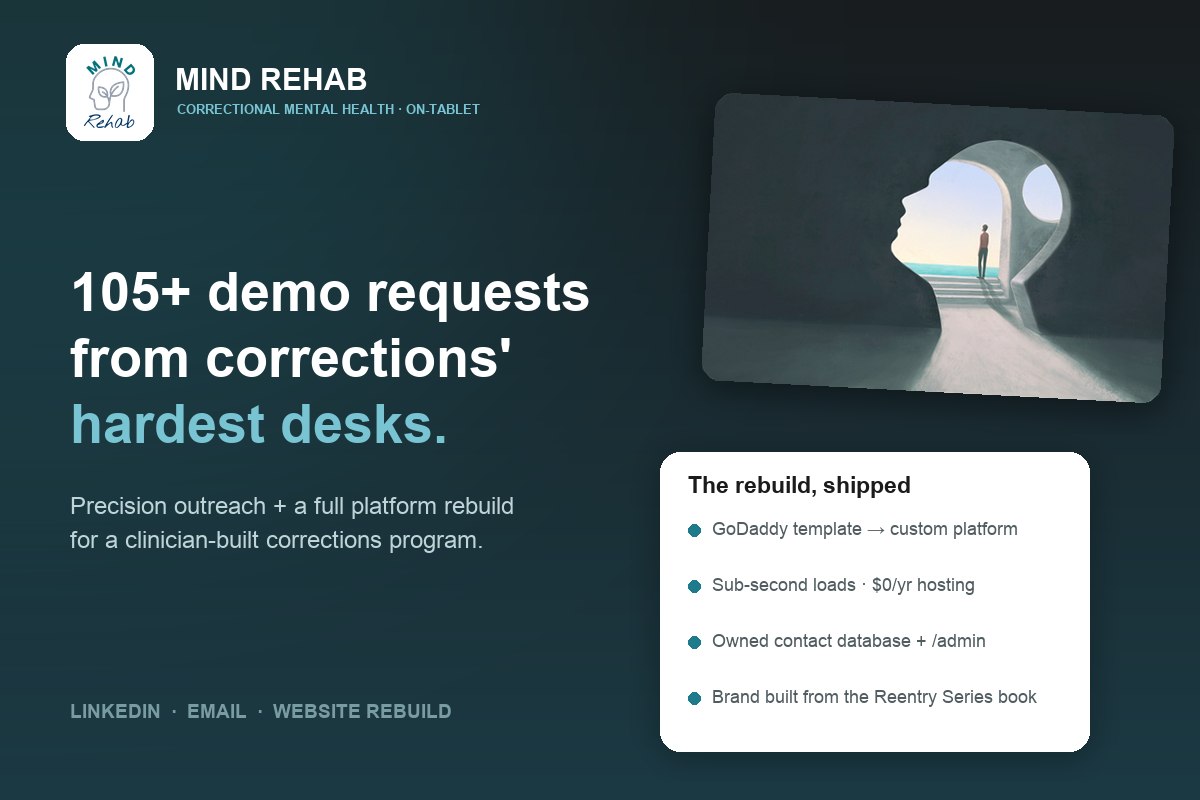
The results
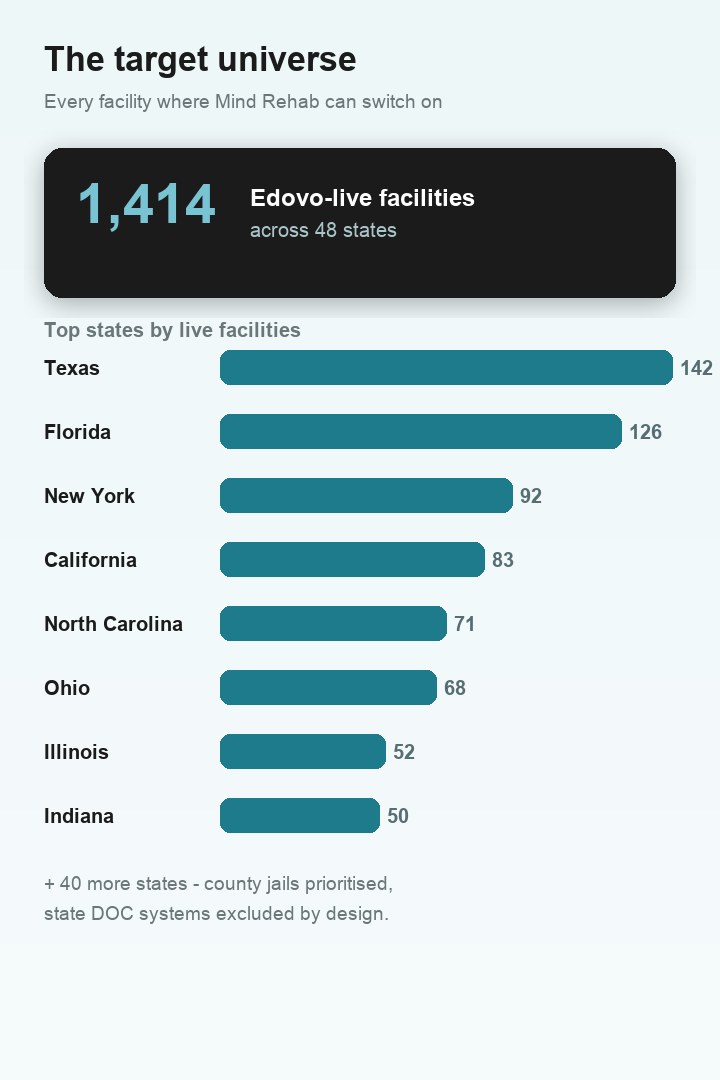
- 1,414 Edovo-live facilities mapped across 48 states - the exact universe where Mind Rehab can switch on, county jails first
- Decision-makers only - sheriffs, jail administrators, wardens and chiefs of corrections on tier one; mental-health, clinical and behavioral-health directors on tier two
- Founder-voice messaging - every message as Ashley Miller, PMHNP: ten years in county jails, co-built with correctional psychiatrist Dr. Yalda Safai - a peer writing, not a vendor
- Value before pitch - free sample workbook sections and a live module link in the first touches; no deck, no demo ask until invited
- 105+ demo requests logged - 81 via LinkedIn and 25 via email, each with contact details hunted, materials sent and follow-ups scheduled
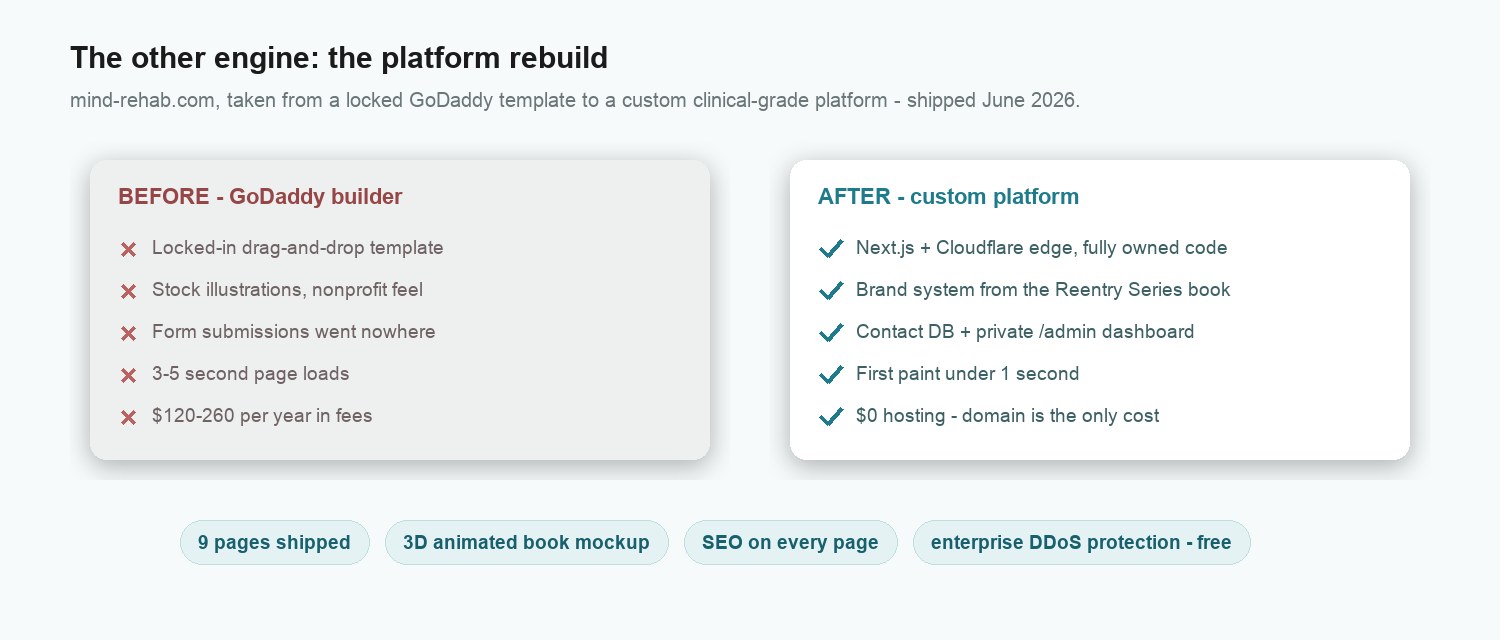
- The second engine: mind-rehab.com rebuilt from a locked GoDaddy template into a custom platform - sub-second loads, an owned contact database and a brand worthy of the clinical work
This is not a mass outreach campaign. It is a precision system - surface real pain, build genuine trust, and position Mind Rehab as the natural solution before a single slide is ever shown.
- from the campaign playbook
About Mind Rehab
Mind Rehab is a clinician-built mental health and reentry program for incarcerated people - CBT, DBT and MI-based modules covering mental health, substance use, court literacy and reentry, delivered on the tablets facilities already deploy. It was built by Ashley Miller, PMHNP-BC, after a decade in county-jail psychiatry, together with correctional psychiatrist Dr. Yalda Safai - 30 hand-crafted topics, a 400+ page workbook library and the Reentry Series book, now live on five correctional tablet platforms including Edovo’s 1,400+ facility network.
The product reaches inmates through tablets that are already inside. The challenge is the people outside the walls: the sheriffs, wardens and clinical directors who decide what gets switched on - the hardest B2B audience in America.

Two tiers, two conversations
Corrections leaders don’t browse LinkedIn and don’t answer sales decks. Each tier got the hook that matches its reality.
🏛️ Tier 1 - the operators
- Sheriffs - liability, budget and facility safety: mental-health incidents cost more to ignore
- Jail administrators & commanders - operational load: zero additional staffing required
- Wardens - daily order: structured programming, fewer incidents
- Directors of corrections - compliance: trackable engagement built in
🩺 Tier 2 - the clinical champions
- Mental-health directors - waitlists and under-resourcing: scale without burning out the team
- Clinical directors - evidence-based programming: CBT and DBT frameworks, clinician-built
- Behavioral-health directors - outcomes and documentation: structured content with real engagement data
- HSAs, program & reentry directors - the internal champions who carry it to the budget holder
How we ran it
- 1. Universe mapping - 1,414 Edovo-live facilities across 48 states loaded as the master list, state DOC systems excluded, county jails prioritised
- 2. Decision-maker research - every facility mapped to its real buyers using a strict title taxonomy, from sheriff to behavioral-health director
- 3. Peer-voice messaging - Ashley’s own story in every message, rewritten and re-tested monthly as reply data came in
- 4. Value-first touches - sample workbook sections and a live module link given freely; the ask was an opinion, not a meeting
- 5. The demo desk - every request logged with role, facility, hunted email, materials sent, platform and follow-up date
- 6. The rebuild - mind-rehab.com re-engineered end to end, so every click from a warden lands on a platform that looks as clinical as the program is
The other engine: the platform rebuild
Outreach opens the door - the website has to hold it open. We rebuilt mind-rehab.com from a locked GoDaddy template into a custom, clinical-grade platform with full code ownership.
What made it work
Corrections is a trust market with thick walls. The campaign worked because nothing about it read as sales: a psychiatric NP who spent years on the floor, writing to peers about a gap they live with daily, giving real clinical material away before asking for anything. The precision did the rest - 1,414 facilities where the program can actually switch on, mapped to the people who can actually say yes. And when they clicked through, the platform finally looked like the clinical work it represents.
Wardens don’t take sales calls. They answer a peer who’s worked the floor - so every message sounded like one, because it was.
- Talal Amir, Campaign Manager, AISH